Most Christians grow up learning the story of Noah’s Ark as one of the Bible’s simplest lessons.
God is angry at human wickedness. God warns Noah. Noah obeys. The flood comes. The righteous are saved. God starts over.
It’s colorful. It’s memorable. It’s often one of the first Bible stories children ever hear. And because of that, it is rarely examined.
But when we slow down and actually think about what the story claims—what must be true for it to be true—it stops being simple very quickly.
It becomes morally disturbing.
What the Story Actually Says Happened
According to Genesis, God flooded the entire world and killed every living human being except eight people. That includes men and women who had never heard a warning. It includes children. It includes infants.
There is no verse that says babies were spared.
There is no verse that says children were given mercy.
There is no verse that says the innocent were protected.
They drowned.
If we accept the story as literal history, that is not an emotional reaction—it is the unavoidable conclusion.
Christians often respond by saying, “Everyone was wicked.” But that answer quietly asks us to accept something extraordinary: that infants were morally guilty enough to deserve death by drowning.
If that feels uncomfortable, it should. The story demands it.
“God Is Love”—Except Here?
Many of us were raised hearing that “God is love.” That God is just, merciful, slow to anger, and full of compassion.
So here is the question the flood story forces on us:
If drowning innocent children is compatible with perfect love and justice, then what wouldn’t be?
At that point, “God is good” no longer means what we normally mean by “good.” It becomes a phrase that means “whatever God does is good by definition,” even if we would condemn the same act in any human being.
That is not moral reasoning. It is moral surrender.
The Ark Problem (And Why the Defenses Don’t Fix It)
We are told that Noah gathered representatives of every animal kind onto a single wooden boat. Over time, Christians have offered many explanations for how this might have worked.
You may have heard some of them:
- God brought the animals to Noah
- They were young animals
- There were fewer “kinds” back then
- God miraculously sustained them
Notice something important: every explanation requires additional miracles not mentioned in the story.
Once we allow unlimited miracles to solve practical problems, the story becomes impossible to test. Any difficulty can be explained away by adding another miracle. At that point, the story is no longer history—it is theology protected from questions.
That doesn’t make it evil. But it does make it something other than a factual account of what happened.
This Was Not a New Story
The Bible was not the first place a great flood story appeared.
Long before Genesis was written, people in the ancient Near East told stories about gods flooding the world and sparing a chosen survivor. Versions appear in the Epic of Gilgamesh and earlier Mesopotamian texts.
These stories came from a region where destructive floods were real and terrifying. People explained them the way ancient people explained many things: through stories about divine judgment and renewal.
Genesis fits into that tradition. It does not stand apart from it.
That does not mean the authors were dishonest. It means they were human—shaped by the world they lived in, using the storytelling tools available to them.

Why We Learn This Story So Young
The flood story is almost always taught to children before they are old enough to question it.
It is softened with animals.
It is decorated with rainbows.
It is turned into a lesson about obedience.
What is left out is the death.
By the time many Christians are old enough to really think about the implications, the story has already been emotionally locked in. Questioning it doesn’t feel like intellectual disagreement—it feels like betrayal.
That reaction is not accidental. Repetition before critical thinking develops is one of the most effective ways to protect an idea from scrutiny.
Modern Attempts to Make It “Scientific”
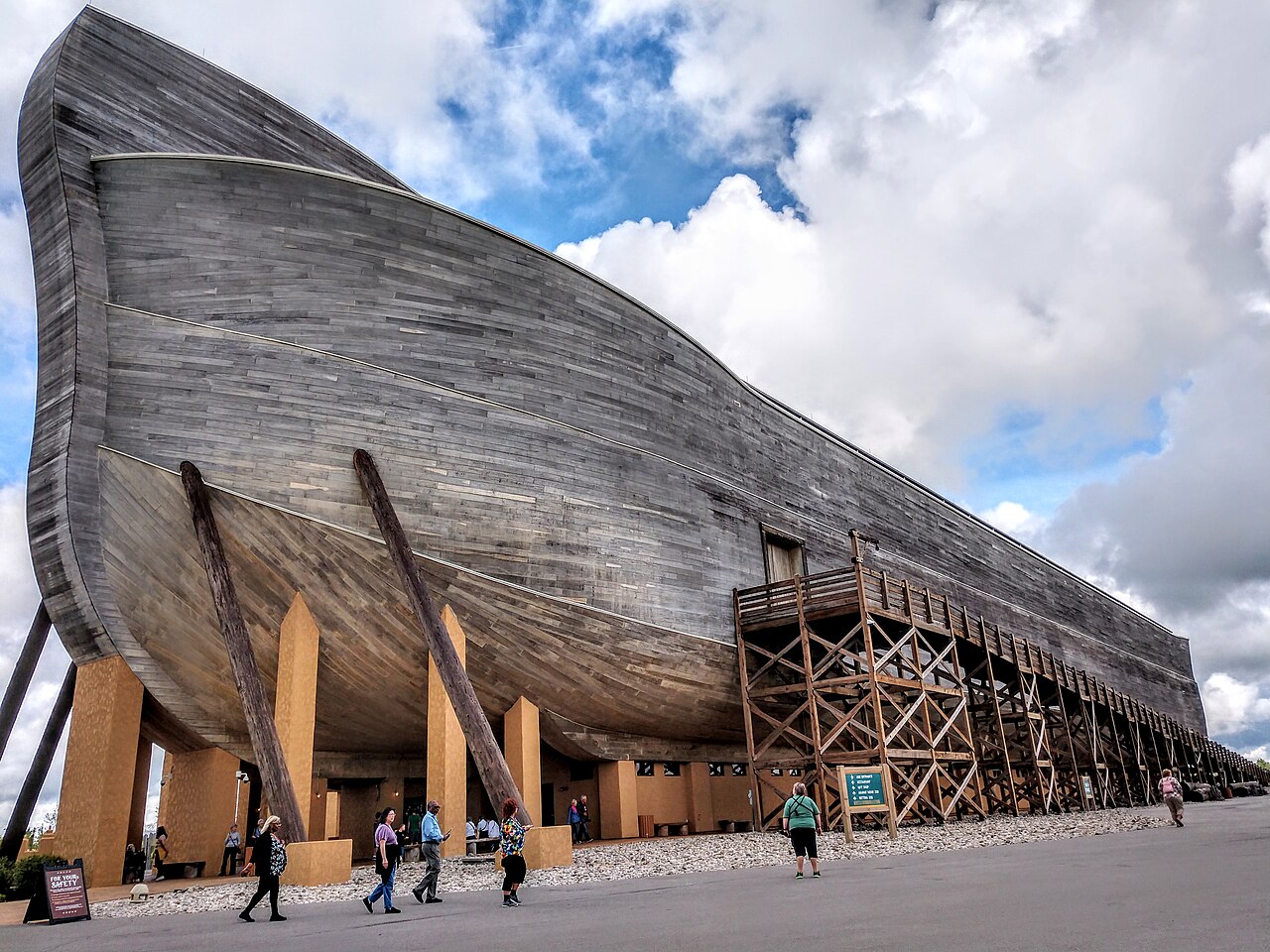
Some Christians insist that the flood must be literal history because their faith depends on it. This has produced museums, documentaries, and expeditions claiming scientific support for the ark.
The most famous of these efforts are tied to figures like Ken Ham and institutions such as the Creation Museum.
Despite decades of searching, satellite imagery, and expeditions, there is still no credible geological evidence for a global flood and no verified remains of a massive wooden ark.
The Earth’s geological record simply does not show it.
At some point, continuing to insist otherwise stops being faith and becomes denial.

What This Story Really Is
The flood story works very well as a myth.
It works as a warning.
It works as a reflection of ancient fears and hopes.
What it does not work as is literal history without asking us to abandon moral consistency, historical context, and evidence.
And once you see that, an uncomfortable question follows:
If this story has been misread for centuries, what else might we have been told not to question?
That question is not dangerous.
Avoiding it is.
Author’s Note
I write pieces like this not to mock faith or to tell anyone what they must believe, but to ask the kinds of questions I was never encouraged to ask when I was younger. I grew up in church. I learned these stories early, often before I was old enough to think through what they actually claimed or what they required me to accept. This essay is an invitation to slow down and examine those claims honestly—without fear, without pressure, and without the assumption that questioning is a moral failure. If a belief is true, it should not need protection from sincere curiosity. And if a question feels uncomfortable, that may be a sign that it’s worth asking.
Leave a Reply